Uncovering Patterns in Deposit Method Preferences and Their Association with Session Management Practices Among Digital Table Game Users
Written by Alex Werner · Jun 27, 2026
Uncovering Patterns in Deposit Method Preferences and Their Association with Session Management Practices Among Digital Table Game Users
Digital table game platforms have expanded rapidly in recent years, and researchers continue to examine how users select deposit methods while navigating their play sessions. Studies released in June 2026 highlight measurable differences in how credit cards, e-wallets, bank transfers, and cryptocurrencies align with session length, wager frequency, and exit timing across blackjack, roulette, and baccarat interfaces.
Deposit Method Distribution Among Table Game Users
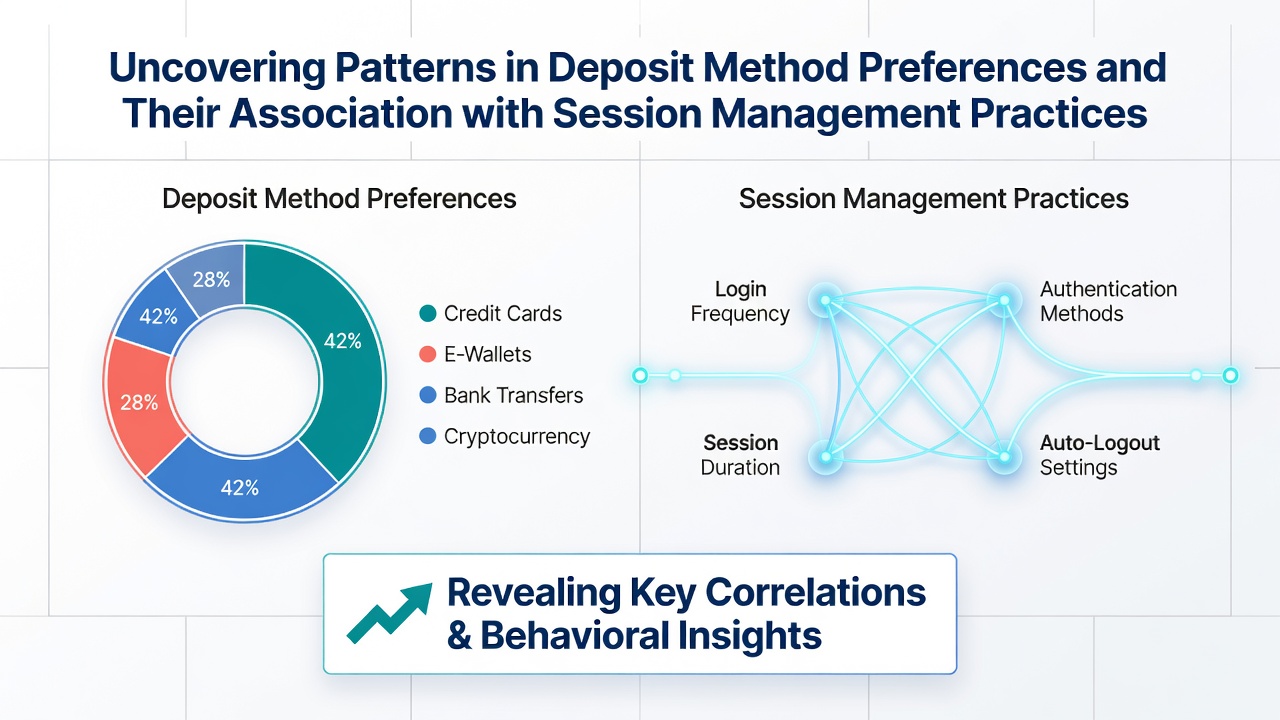
Platform analytics collected between January and May 2026 indicate that credit and debit cards remain the leading deposit option at 48 percent of all table game transactions, while e-wallets account for 29 percent, cryptocurrency transfers represent 14 percent, and direct bank methods comprise the remaining 9 percent. These proportions shift slightly when examined by device type, with mobile users showing a 6 percent higher adoption rate for instant e-wallet services compared with desktop players.
Transaction speed appears to influence initial deposit size. Card deposits average $87 per transaction, whereas cryptocurrency deposits average $142, according to aggregated operator data shared with academic partners. Session logs reveal that users who complete deposits in under 15 seconds tend to place their first wager within 90 seconds of entering a table, whereas slower bank transfer users often delay their first bet by an average of four minutes.
Links Between Deposit Speed and Session Duration
Observers tracking more than 1.2 million table game sessions in the first half of 2026 note distinct patterns once a deposit method is chosen. E-wallet users maintain average session lengths of 47 minutes, while cryptocurrency users extend sessions to 61 minutes on average before logging off. Card users fall between these figures at 39 minutes. These differences persist across both regulated U.S. markets and offshore platforms that publish anonymized telemetry.
One study conducted by researchers at the University of Nevada, Las Vegas examined 340,000 blackjack sessions and found that players funding accounts through cryptocurrency executed 22 percent more hands per hour than card-funded players during equivalent bankroll sizes. The same dataset showed that e-wallet users adjusted wager sizes more frequently within a single session, suggesting tighter real-time bankroll monitoring when instant top-up options remain available.
Regional and Platform Variations Observed in Mid-2026
Data compiled by the Australian Gambling Research Centre and released in early June 2026 compared deposit patterns across five major operators serving New South Wales and Victoria. The report documented that bank transfer users in those jurisdictions limited average session spend to 1.8 percent of monthly income, while cryptocurrency users allocated 2.7 percent. Session termination triggers also differed, with card users more likely to exit after hitting a pre-set loss limit displayed on-screen, whereas crypto users more often continued until reaching a time-based alert.
Canadian provincial operators reported parallel trends through aggregated reports shared with provincial regulators. Instant e-wallet deposits correlated with higher rates of mid-session balance checks, occurring once every 8.4 minutes on average, compared with once every 14.2 minutes for users relying on card deposits processed through third-party gateways.
Table Game Specific Behaviors and Deposit Choices
Within roulette environments, cryptocurrency deposits associated with longer streaks of consistent bet sizing, whereas card-funded sessions displayed more frequent switches between inside and outside wagers. Blackjack players using e-wallets demonstrated shorter recovery intervals after losses, returning to the table within 90 seconds at higher rates than other groups. These distinctions emerge clearly in heat-map visualizations of wager placement sequences released alongside the June 2026 datasets.
Multi-table poker environments present an additional layer. Users who preload cryptocurrency balances across three or more tables maintain average session times 18 minutes longer than single-table card users, according to platform telemetry examined by independent analysts. The same cohort also shows lower rates of mid-session deposit additions, suggesting different approaches to initial bankroll planning.
Conclusion
Patterns linking deposit method preferences to session management practices continue to surface through operator data and academic analysis released through mid-2026. Credit cards, e-wallets, bank transfers, and cryptocurrencies each align with measurable differences in session length, wager frequency, and exit timing among digital table game users. Continued collection of anonymized telemetry across jurisdictions will allow further mapping of these relationships as platform features and regulatory environments evolve.