Shifts in player retention metrics following the adoption of gamification elements within various digital betting interfaces
Written by Yara Powell · Jun 6, 2026
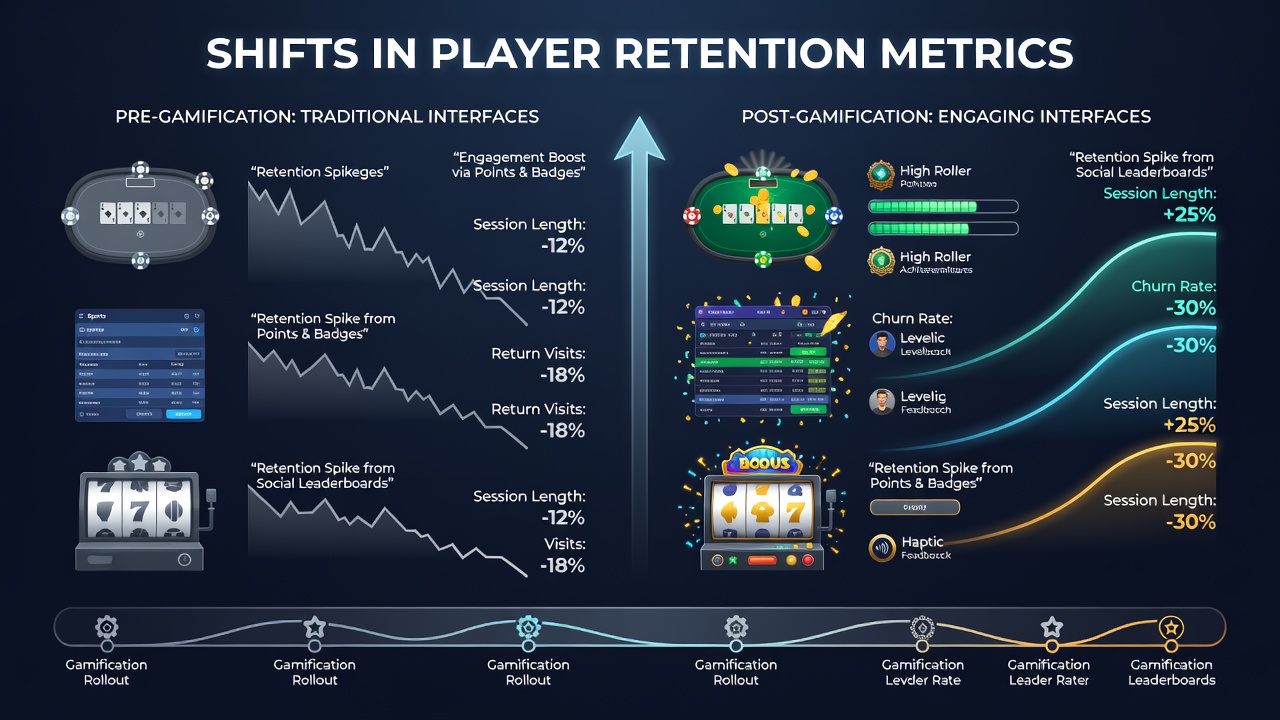
Shifts in player retention metrics following the adoption of gamification elements within various digital betting interfaces
Digital betting platforms began incorporating gamification elements such as progress bars, achievement badges, and leaderboard rankings at an accelerated pace during 2025, and data collected through the first half of 2026 reveals measurable changes in how long users stay active on those interfaces. Operators tracked daily active users alongside repeat login rates, while analysts compared pre-gamification and post-gamification cohorts across multiple jurisdictions. Those comparisons show that average session frequency rose on platforms that introduced tiered reward systems, yet the magnitude of the increase varied depending on whether the features rewarded consistent play or high-volume wagering.
Tracking Retention Through Standardized Metrics
Retention is typically measured by day-7 and day-30 return rates together with lifetime session counts, and several large operators released aggregated figures in quarterly updates that reached the public domain by June 2026. One dataset compiled by the New Jersey Division of Gaming Enforcement indicated that interfaces using daily login streaks recorded a 14 percent lift in day-30 retention compared with the same period one year earlier. Another set of numbers released by the Australian Communications and Media Authority showed similar directional movement, although the absolute percentages differed because of regulatory distinctions in bonus structures.
Researchers at academic institutions examined these operator reports and applied regression models that isolated the contribution of individual gamification mechanics. Their work demonstrated that point-based progression systems correlated most strongly with extended session duration, while social comparison tools such as friend leaderboards produced larger effects on frequency of return visits. The models also controlled for marketing spend and game variety, confirming that the observed retention gains remained statistically significant after those variables were accounted for.
Regional Patterns and Platform Differences
North American markets displayed faster uptake of gamification than many European counterparts, partly because regulatory sandboxes in states like New Jersey and Pennsylvania allowed quicker testing cycles. Canadian provincial regulators, by contrast, required additional documentation on responsible gambling safeguards before approving certain achievement mechanics, which delayed rollout but produced more granular data on user behavior once features launched. In Australia, state-level licensing bodies required operators to publish retention statistics segmented by gamification type, creating a public dataset that analysts outside the industry could access directly.
Platform architecture influenced outcomes as well. Mobile-first applications that integrated push notifications for streak reminders showed higher day-7 retention than desktop-heavy sites that relied on email prompts alone. One operator that migrated its entire user base to a unified mobile interface in early 2026 reported that the combination of gamification and improved notification timing produced a 19 percent increase in average sessions per user over a six-month window. Desktop-only environments, however, recorded smaller lifts, suggesting that delivery channel and gamification interact in measurable ways.
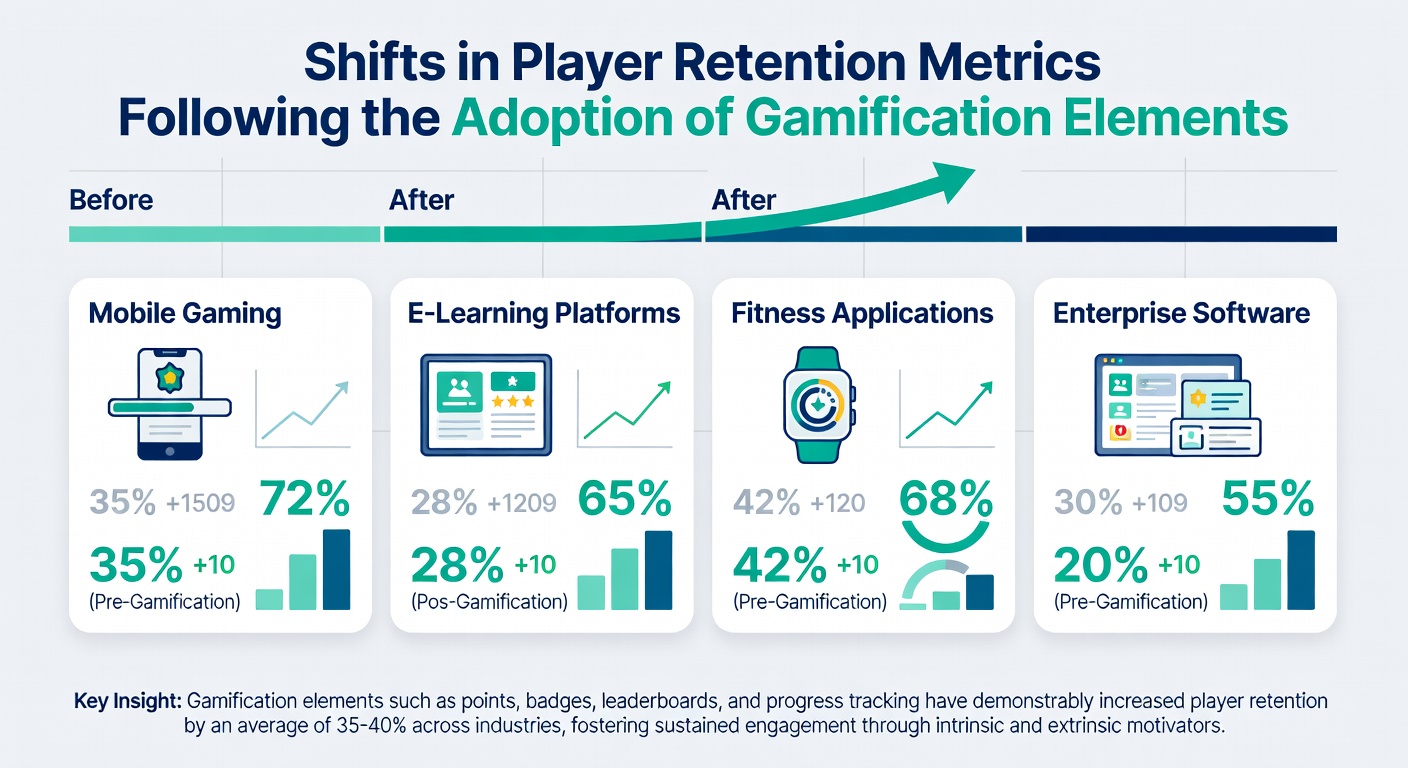
Segment-Specific Responses
Demographic breakdowns reveal that users aged 25 to 34 responded most strongly to competitive elements such as weekly tournaments and badge collections, while older cohorts showed greater retention gains from personalized milestone rewards. Gender differences also appeared in the data, with female users demonstrating higher engagement with narrative-driven progress systems that framed betting activity as a journey with chapters and levels. Operators that segmented their analytics by these variables were able to refine feature deployment and sustain retention improvements over longer periods.
High-value players and casual users reacted differently to the same mechanics. Leaderboards that emphasized total volume tended to retain the top decile of bettors at elevated rates, yet they sometimes reduced return frequency among lower-stakes participants who felt the competition was out of reach. Several platforms therefore introduced tiered leaderboards that separated users by historical activity level, and subsequent measurements indicated that this adjustment narrowed the retention gap between segments.
Measurement Challenges and Data Sources
Attributing retention shifts solely to gamification remains difficult because operators often launch multiple product changes simultaneously. Industry associations have begun advocating for standardized A/B testing protocols that would allow cleaner isolation of feature effects, and preliminary frameworks discussed at a 2026 research symposium in Toronto outlined methods for tagging individual mechanics within live traffic. Until such standards become widespread, observers rely on natural experiments created by staggered rollouts across different markets.
Publicly available reports from government agencies continue to serve as primary reference points. The New Jersey Division of Gaming Enforcement publishes monthly activity summaries that now include optional gamification tags, while the Australian Communications and Media Authority releases annual interactive gambling reports that contain retention tables segmented by feature type. Academic teams cross-reference these sources with anonymized telemetry shared under research agreements, producing a growing body of peer-reviewed findings that track how gamification alters user longevity.
Conclusion
Retention metrics across digital betting interfaces have shifted measurably since gamification elements became widespread, and the direction of those shifts has been consistent even when absolute numbers vary by region and platform design. Continued collection of segmented data through 2026 adn beyond will clarify which combinations of features produce the most durable gains while meeting regulatory expectations for transparency and player protection.