Seasonal Player Shifts Align with Tournament Structures Across Digital Poker Platforms
Written by Anna Neumann · Jun 20, 2026
Seasonal Player Shifts Align with Tournament Structures Across Digital Poker Platforms
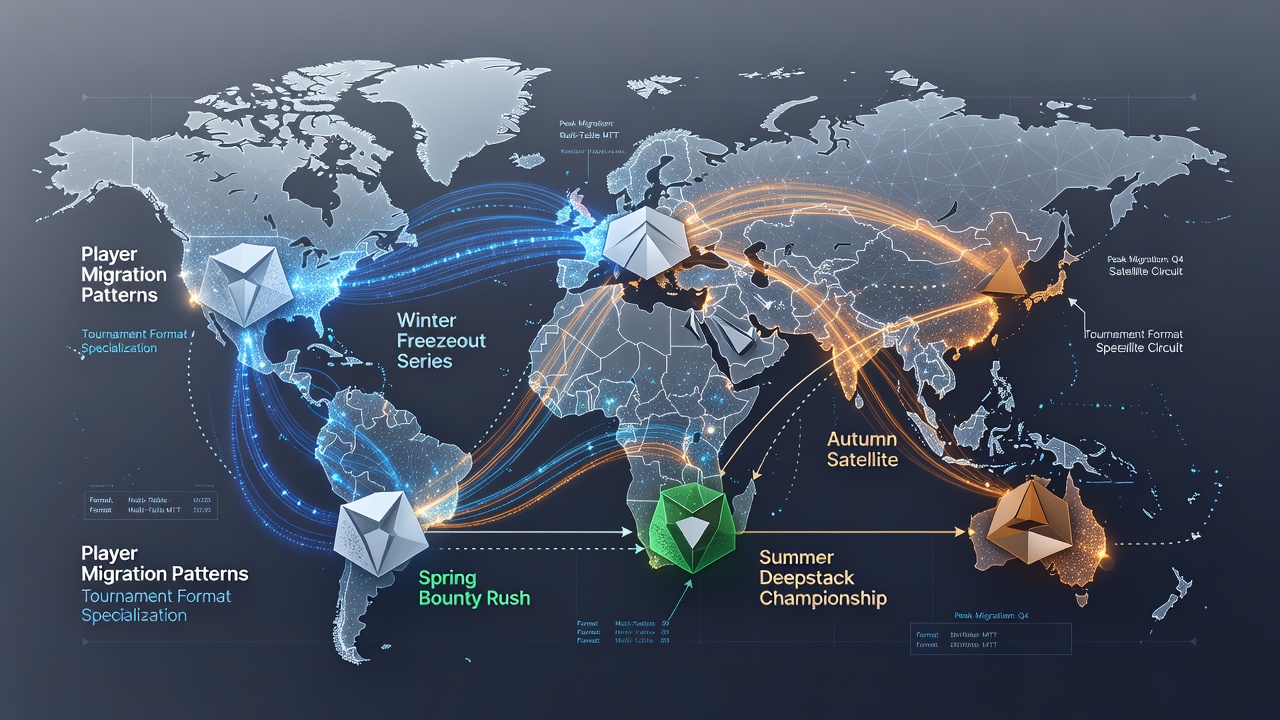
Digital poker networks track player movements that follow recurring seasonal cycles tied to tournament formats rather than random fluctuations. Data collected through 2025 and into June 2026 reveals consistent patterns where participants transition between cash-game heavy environments and structured multi-table tournaments as calendar months advance. Observers note these shifts occur across major platforms where specialized events such as bounty knockouts and progressive knockout formats gain traction during specific periods.
Documented Migration Cycles in Online Poker Ecosystems
Research indicates that player volume on networks peaks in winter months within formats emphasizing endurance such as deep-stack multi-table events while summer periods see increased activity in shorter sit-and-go and hyper-turbo structures. These transitions appear linked to external factors including holiday schedules and daylight availability that influence session lengths. Figures from platform analytics show a measurable uptick in knockout tournament registrations beginning in late fall and extending through early spring across North American and European user bases.
Specialized formats attract distinct demographic segments at different times of year. Bounty-style events draw higher participation rates during periods when promotional overlays coincide with extended weekends according to aggregated network reports. Meanwhile progressive formats maintain steadier engagement through summer months when shorter session commitments align with travel and outdoor activity patterns.
Format Specialization and Cross-Network Player Flows
Networks differentiate their tournament calendars to capture migrating player segments. One platform may emphasize high-stakes progressive knockout series during winter while another ramps up satellite feeders into live festival events during spring. Data shows these scheduling decisions correlate with measurable player transfers between sites rather than overall industry growth alone. Players frequently maintain accounts across multiple networks and route activity toward the platform offering the format that matches their seasonal preference at any given time.
Industry reports compiled by research groups such as the European Gaming and Betting Association document similar patterns in regulated markets where tournament structures influence retention metrics. Cross-border data protocols enable these observations because verification systems record consistent user identifiers across jurisdictions. teh result is a clearer picture of how specialized events function as seasonal attractors rather than permanent fixtures.
June 2026 Data Points on Tournament Participation
Through the first half of 2026 networks reported elevated registration numbers for mid-stakes knockout events coinciding with the conclusion of major live festival seasons. Participation in these formats increased notably in regions where regulatory frameworks permit online play. Shifts toward hyper-turbo and single-table formats appeared more pronounced among mobile users during teh same period reflecting shorter available session windows. Network operators adjust guarantee levels and overlay structures accordingly to maintain liquidity in each format category.
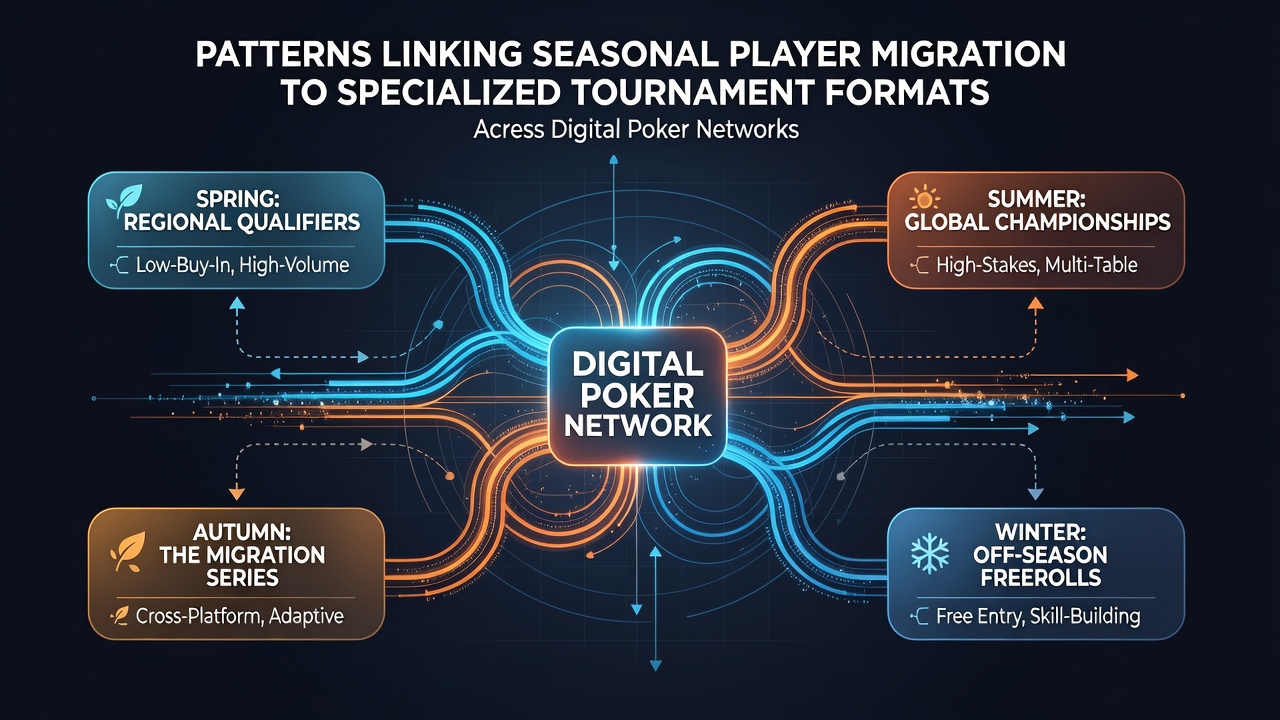
Academic studies examining transaction and session data have identified correlations between format complexity and seasonal retention. Researchers at institutions tracking digital gaming behaviors found that bounty formats experience higher churn rates during summer while endurance-based multi-table events retain participants more effectively in colder months. These findings derive from anonymized datasets that preserve privacy while revealing aggregate behavioral trends.
Regional Policy Influences on Format Availability
Policy variations across jurisdictions shape which specialized tournaments networks can promote during peak migration windows. Platforms operating under multi-state frameworks adapt event structures to comply with local rules while still capturing seasonal player flows. Canadian and Australian regulatory environments for example maintain distinct approaches to tournament guarantees that affect how networks schedule bounty and progressive events relative to North American calendars. Observers tracking these differences note that player migration accelerates when one jurisdiction offers format advantages unavailable elsewhere.
Payment processing speeds and verification timelines further influence which networks capture migrating players during high-activity seasons. Faster cashout options correlate with increased participation in time-sensitive formats such as daily turbo series. Networks that streamline these processes retain seasonal traffic more effectively than those with extended processing windows.
Conclusion
Patterns connecting seasonal player migration to specialized tournament formats continue to emerge from aggregated network data through mid-2026. These movements reflect structured responses to format availability calendar timing and regulatory environments rather than isolated preferences. Continued monitoring across digital poker platforms will clarify how operators refine event structures to align with predictable migration cycles while maintaining compliance across jurisdictions.