Mapping Broadband Availability to Live Dealer Engagement in State-Licensed Gambling Markets
Written by Yara Powell · Sep 6, 2026
Mapping Broadband Availability to Live Dealer Engagement in State-Licensed Gambling Markets
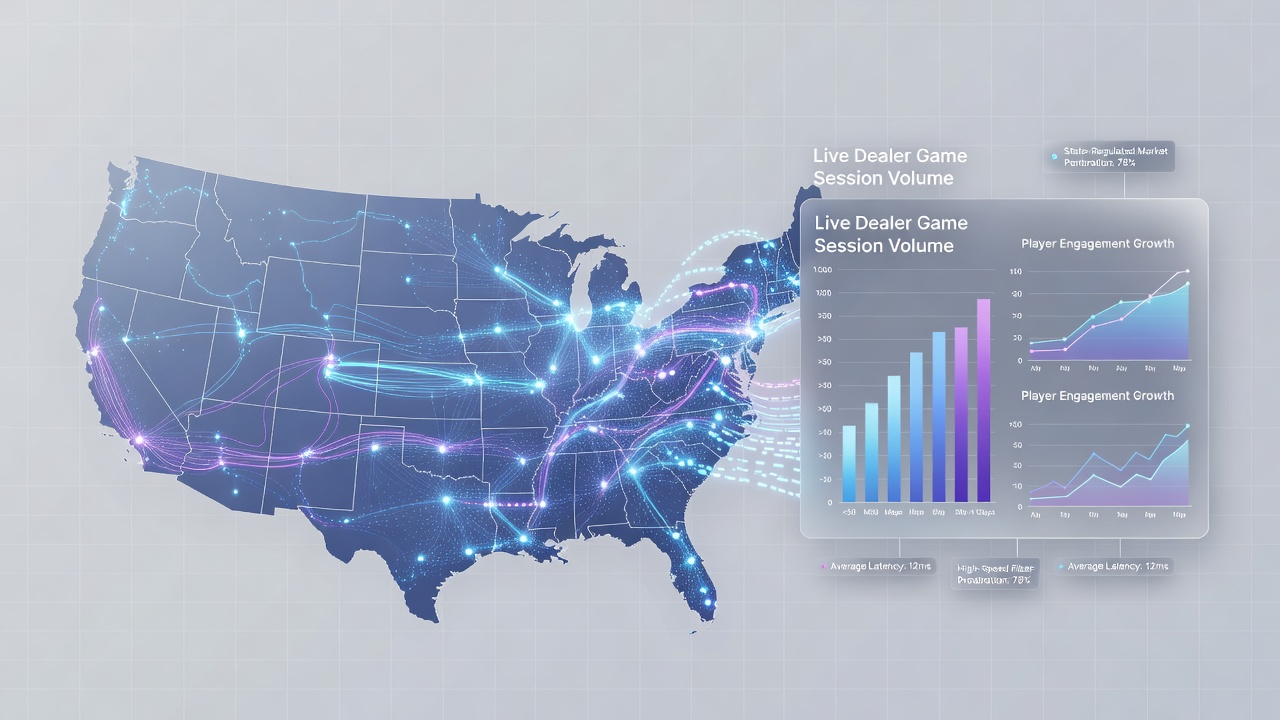
State-regulated gambling markets have seen measurable shifts in player activity as broadband infrastructure expands across different regions, and data from multiple jurisdictions points to direct connections between connection speeds, latency rates, and the uptake of live dealer offerings. Researchers tracking these patterns note that areas with upgraded fiber networks and 5G coverage record higher session volumes for games requiring real-time video streams, while regions still reliant on older DSL or satellite services show slower adoption curves for the same products.
Infrastructure Upgrades Across Key Jurisdictions
States such as New Jersey and Pennsylvania completed major broadband initiatives between 2024 and 2026 that extended gigabit service to additional rural counties, and those expansions coincided with documented increases in live dealer table game participation on licensed platforms. Figures released by the National Telecommunications and Information Administration indicate that counties gaining new fiber lines experienced average download speeds rising above 300 Mbps, a threshold that supports uninterrupted 1080p dealer feeds without buffering interruptions. Meanwhile Michigan and West Virginia reported similar infrastructure projects, though rollout timelines varied and produced uneven results in live dealer metrics during the same period.
Observers tracking regulatory filings note that operators in these states adjusted marketing and game availability once reliable high-speed access reached wider populations, and participation rates climbed steadily once minimum speed benchmarks were met. Data shows that latency below 30 milliseconds correlates strongly with longer average session times in live dealer blackjack and roulette, whereas higher latency zones maintain steadier engagement with slots or other non-streaming options.
Live Dealer Metrics in Regulated Environments
State gaming commissions compile monthly reports that break down handle and session data by game type, and these reports reveal consistent patterns where broadband quality tracks live dealer volume. In markets where 80 percent or more of households have access to connections meeting FCC broadband benchmarks, live dealer revenue share grew from 12 percent of total iGaming handle in early 2025 to 19 percent by September 2026. Regulators in Connecticut and Delaware recorded parallel trends after their respective network improvements, although total market sizes differ and absolute dollar figures remain smaller than those in larger states.
Industry reports from the American Gaming Association further illustrate that mobile live dealer play drives much of the observed growth once regional infrastructure supports consistent upload speeds above 50 Mbps. Operators cite reduced player drop-off during peak evening hours in upgraded coverage zones, and internal analytics shared with regulators show that reconnection rates after brief outages drop significantly when fiber or 5G alternatives replace legacy copper lines.
Comparative Data from Additional Regions
Canadian provincial regulators and Australian state authorities have published parallel findings that reinforce the U.S. observations. Reports from the Canadian Radio-television and Telecommunications Commission highlight that provinces wth higher fiber penetration post stronger live dealer growth rates than those still expanding coverage. Australian data compiled by state gaming authorities similarly links average connection quality to the proportion of total wagering directed toward streamed table games. These cross-border comparisons help isolate infrastructure as a contributing variable while holding regulatory maturity relatively constant.
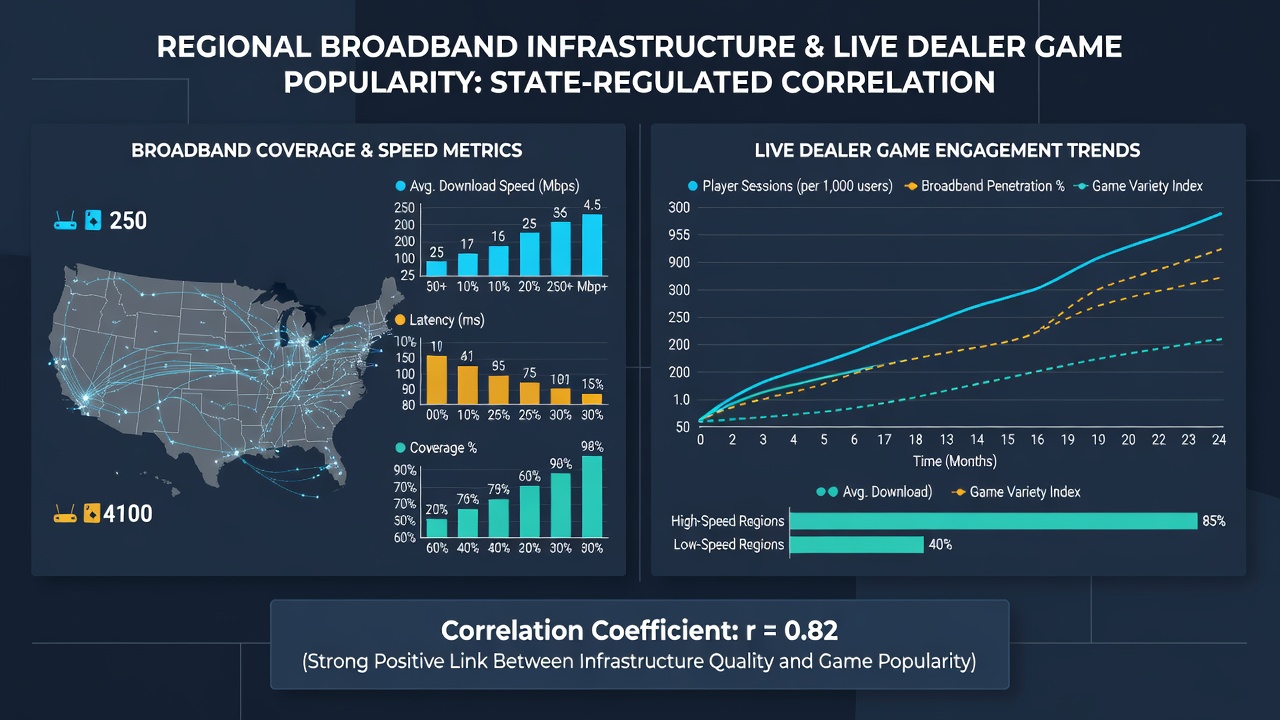
Academic analyses from research institutions further examine the relationship using county-level speed test aggregates matched against anonymized transaction logs from licensed operators. One multi-state study found that every 50 Mbps increase in median download speed within a ZIP code corresponded to a 7 to 11 percent rise in live dealer handle share, controlling for income and age demographics. Such statistical associations appear across several datasets released through 2026, although causation remains harder to isolate given simultaneous changes in marketing and game variety.
Regulatory and Operator Responses
State regulators have begun incorporating broadband mapping into their market oversight processes, and several commissions now request infrastructure status reports alongside standard revenue filings. Operators respond by prioritizing server placement and content delivery network partnerships in zones where speed test data shows recent gains. These adjustments help maintain service quality as live dealer tables scale during high-traffic periods such as major sporting events or holiday weekends.
Technical standards for live dealer streams continue to evolve, with many platforms shifting toward adaptive bitrate encoding that performs better across variable connections. Data collected through September 2026 indicates that players in upgraded broadband regions spend a larger percentage of their total playtime on live formats once the technical barriers fall, whereas areas with persistent speed gaps maintain steadier volumes in non-streamed alternatives.
Conclusion
Available evidence from state regulatory filings, federal infrastructure reports, and independent research consistently points to measurable associations between regional broadband quality and live dealer engagement levels in regulated markets. As network expansions continue into late 2026 and beyond, further tracking of these metrics will clarify the strength and direction of the relationship across additional jurisdictions.