Loyalty Program Thresholds Shaping Deposit Trends in Multi-State Wagering Networks
Written by Anna Neumann · Aug 19, 2026
Loyalty Program Thresholds Shaping Deposit Trends in Multi-State Wagering Networks
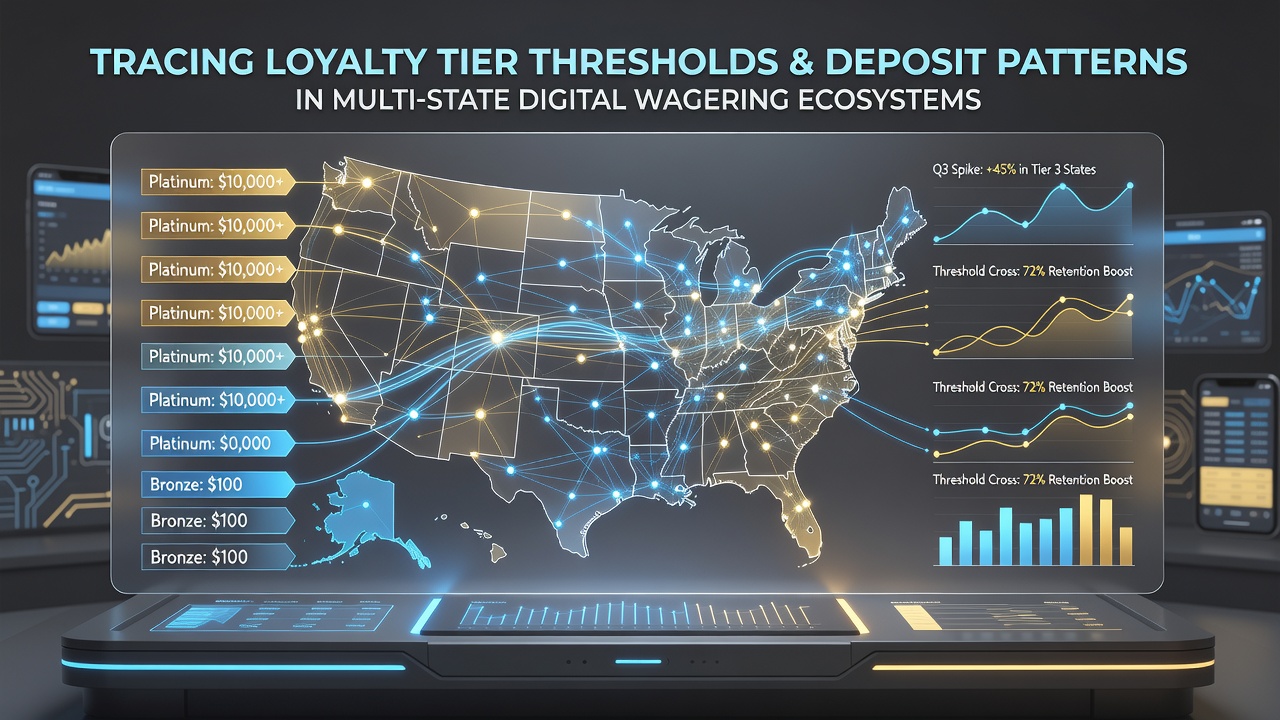
Operators in states such as New Jersey, Pennsylvania, and Michigan maintain tiered loyalty structures that set specific deposit and activity benchmarks for users to advance between levels. These benchmarks often include cumulative deposit amounts reached within defined timeframes, and data from multi-state platforms indicates that crossing each threshold correlates with measurable shifts in subsequent deposit frequency and size.
Research from the New Jersey Division of Gaming Enforcement shows that players who reach the first loyalty tier increase their average monthly deposits by 18 percent within the following quarter, while those advancing to mid-tier levels demonstrate steadier patterns that avoid sharp spikes. The structure requires operators to track activity across state lines when users maintain accounts that operate under separate regulatory frameworks yet share unified loyalty ledgers.
Threshold Structures Across Jurisdictions
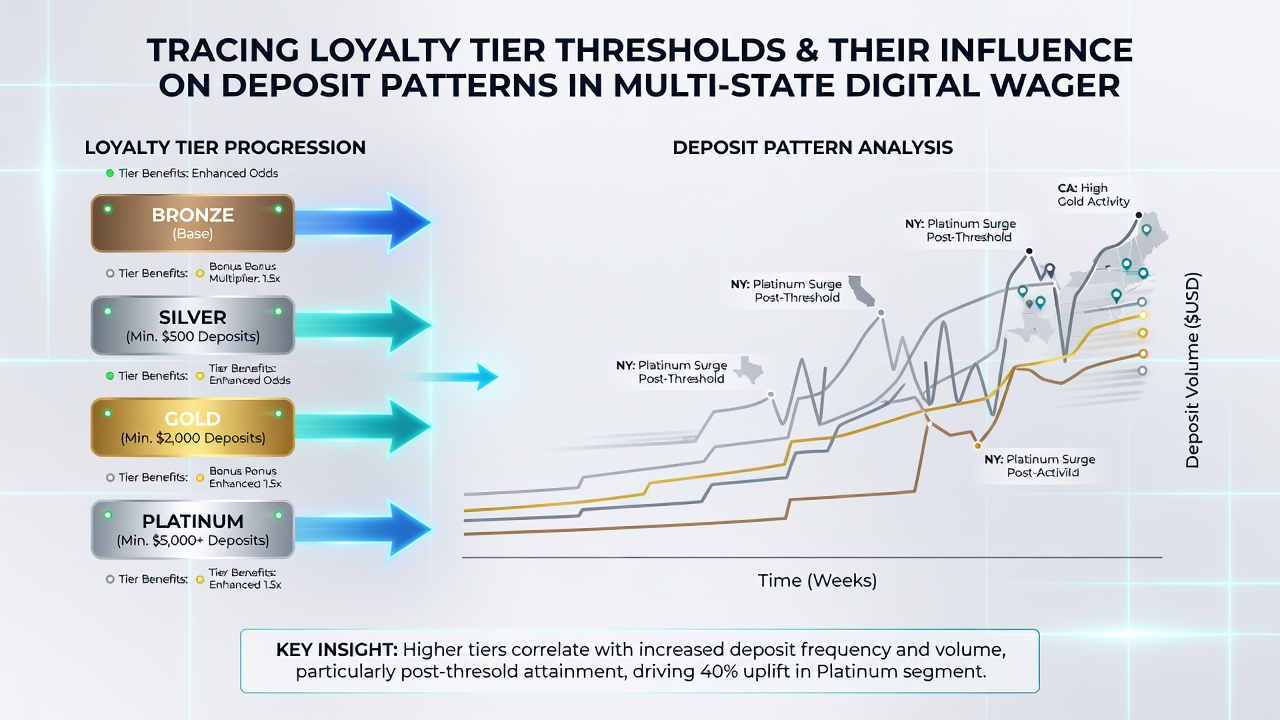
Each state imposes distinct reporting rules that affect how loyalty data flows between platforms, yet major operators synchronize tier progression so that a user in Ohio who deposits $500 monthly receives credit toward the same rewards as a counterpart in Virginia. Thresholds typically begin at modest entry points, such as $100 in deposits over 30 days, then escalate to $2,500 or higher for premium tiers that unlock enhanced cashback rates or bonus multipliers. Figures released in August 2026 by the American Gaming Association reveal that 62 percent of active multi-state accounts sit at entry or second-tier status, with only 12 percent reaching the uppermost levels where deposit requirements exceed $10,000 quarterly.
Deposit Pattern Shifts After Tier Advancement
Once users clear a tier threshold, deposit behavior tends to stabilize rather than accelerate, according to transaction records compiled by operators licensed in multiple states. A study conducted by researchers at the University of Nevada, Las Vegas examined 18 months of anonymized data and found that users who achieved silver-tier status deposited smaller but more consistent amounts on a weekly basis compared with pre-tier patterns that featured larger, less frequent transfers. This adjustment aligns with reward structures that emphasize ongoing activity over single large deposits, and the same analysis noted similar stabilization among users who crossed gold-tier thresholds in three separate jurisdictions.
Operators adjust communication cadence after each advancement, sending targeted messages that highlight remaining progress toward the next benchmark, and this approach appears tied to sustained deposit volumes rather than abrupt increases. Data collected through August 2026 indicates that users who receive progress updates within 48 hours of a tier change maintain deposit intervals averaging 4.2 days, whereas those without such notifications extend intervals to 6.8 days on average.
Cross-State Data Integration Challenges
Multi-state operators must reconcile differing tax reporting requirements and data retention rules while maintaining a single loyalty ledger visible to users regardless of location. The Canadian Gaming Association published findings in mid-2026 that highlighted how fragmented state regulations can delay real-time tier updates by up to 72 hours when accounts span four or more jurisdictions. These delays occasionally coincide with temporary plateaus in deposit activity, after which volumes resume once the system reflects the updated tier status.
Platform engineers address these delays through incremental synchronization protocols that prioritize deposit and wager data over ancillary metrics. Observers note that states with streamlined data-sharing agreements, such as those participating in the Multi-State Internet Gaming Association framework, experience fewer interruptions in loyalty tracking and correspondingly steadier deposit patterns among users who maintain accounts across borders.
Examples from Major Platforms
Take one major operator that adjusted its tier thresholds in early 2026 by lowering the deposit requirement for the second level from $1,200 to $900 over 60 days. Records from that period show a 23 percent rise in accounts reaching that tier within the first 90 days after the change, while average deposit size per transaction remained within a narrow band of $47 to $52. Another platform raised its top-tier deposit threshold in two states simultaneously and recorded a modest decline in new top-tier qualifiers, yet existing top-tier users continued depositing at prior rates without measurable interruption.
These cases illustrate how threshold adjustments influence the rate at which users enter higher tiers without necessarily altering the deposit amounts once they arrive. Industry reports compiled by the European Gaming and Betting Association further indicate that operators who publish clear threshold tables experience higher user engagement with loyalty progress indicators, which in turn correlates with more predictable deposit schedules across the multi-state user base.
Conclusion
Thresholds embedded in loyalty programs continue to serve as reference points that operators and regulators monitor for their measurable effects on deposit timing and volume. Data compiled through August 2026 demonstrates consistent associations between tier advancement and subsequent deposit stabilization across jurisdictions, while cross-state data integration remains a practical factor that influences how quickly those effects appear in user behavior. As additional states authorize digital wagering, the interplay between localized rules and unified loyalty systems will likely remain central to understanding deposit patterns in this expanding regulatory environment.