Crypto Cashouts Unraveled: Withdrawal Mechanics Across Poker and Casino Platforms
Written by Anna Neumann · Apr 20, 2026

Crypto Cashouts Unraveled: Withdrawal Mechanics Across Poker and Casino Platforms
The Rise of Crypto in Online Gaming Withdrawals
Online poker and casino platforms have increasingly embraced cryptocurrencies for withdrawals since the early 2020s, driven by demands for faster transactions and greater privacy; players now handle billions in crypto cashouts annually, according to data from blockchain analytics firms like Chainalysis. This shift comes as traditional fiat methods face delays from bank verifications and currency conversions, whereas crypto transfers leverage decentralized networks for near-instant settlements in many cases. Platforms such as those licensed under Curacao eGaming have led the charge, integrating wallets for Bitcoin, Ethereum, and stablecoins like USDT, allowing users to bypass intermediaries entirely.
What's interesting is how poker sites, with their skill-based multiplayer dynamics, differ from casino operations reliant on RNG-driven slots and tables; yet both share core withdrawal mechanics rooted in blockchain confirmations. Observers note that as of April 2026, enhanced layer-2 solutions on Ethereum have slashed fees by up to 90%, making crypto the go-to for high-volume players across these platforms.
Core Mechanics of Crypto Withdrawals
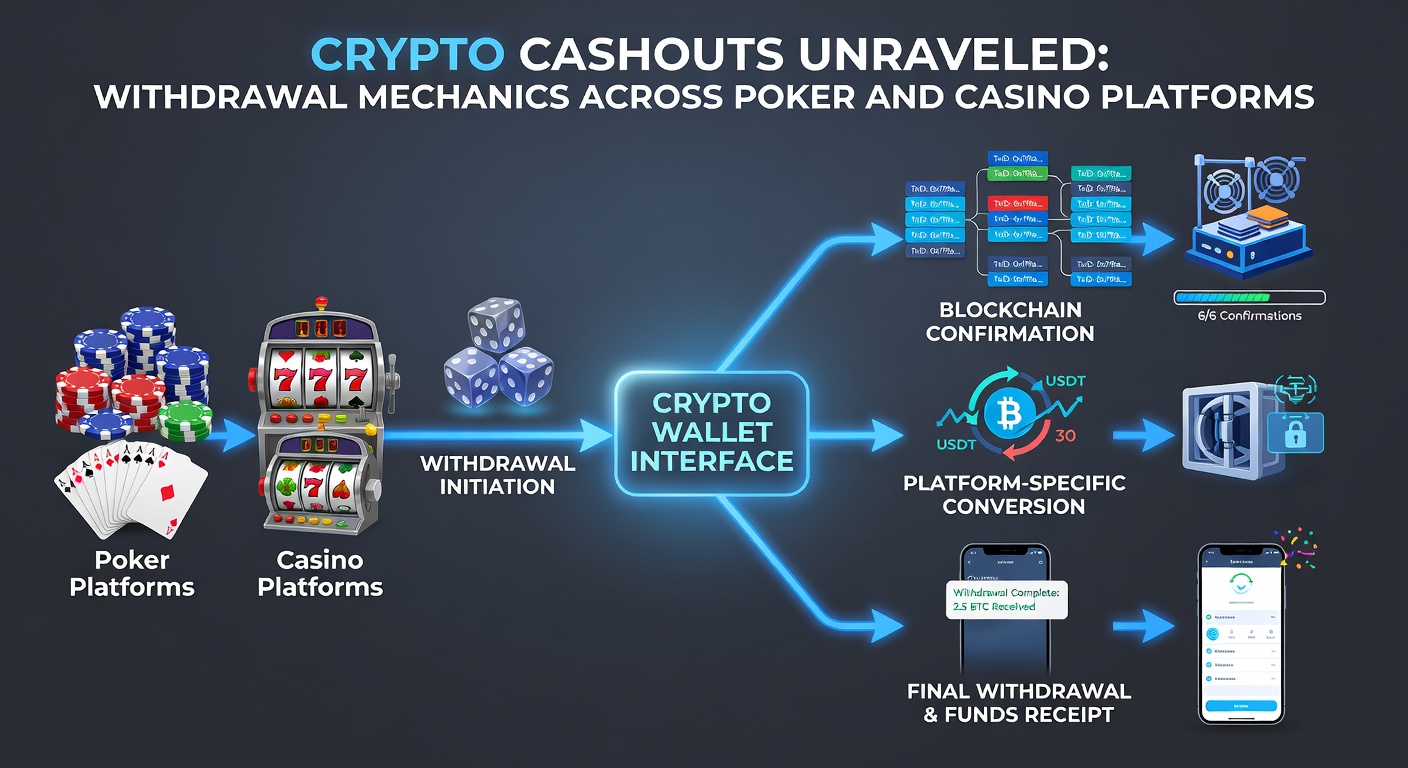
Crypto cashouts begin when a player navigates to the cashier section, selects their preferred cryptocurrency from a list—often including BTC, ETH, LTC, or BCH—and inputs their external wallet address; platforms then deduct the amount after wagering requirements clear, typically processing requests within minutes for automated approvals. Blockchain explorers like Etherscan reveal that most transactions require 1-6 confirmations before funds hit the wallet, a process that varies by network congestion; for instance, Bitcoin networks might take 10-60 minutes during peaks, while Solana-based transfers clock in under 30 seconds consistently.
But here's the thing: platforms enforce minimum withdrawal thresholds to cover network fees—say, 0.001 BTC on poker sites or $20 USDT equivalent on casinos—ensuring viability even for smaller wins. Security layers kick in too, with two-factor authentication mandatory on most, and some employing address whitelisting to prevent errors; one study from the Malta Gaming Authority highlights how these measures reduced fraud incidents by 40% across licensed operators in 2025.
Poker Platforms: Skill Games Meet Swift Crypto Exits
Poker rooms like those powered by networks such as Chico or iPoker stand out for their tournament-heavy structures, where crypto withdrawals often tie into rakeback programs; players cash out tournament prizes or ring game stacks directly to crypto, with processing times averaging 15-30 minutes post-verification. Data from industry trackers shows that sites accepting USDT handle 70% of volume due to its stability, avoiding volatility swings that plague BTC during bull runs.
Take one operator observed in recent analyses: it mandates a 24-hour cooling period for first-time crypto withdrawals, a nod to anti-money laundering rules, yet subsequent requests fly through instantly; experts who've dissected these flows point out how shared liquidity pools across poker networks enable sub-1% fees, far below fiat wires. And while high-rollers appreciate no upper limits on many platforms, casual grinders benefit from micro-withdrawal options starting at $10 equivalents, keeping the action fluid without cashing out prematurely.
Turns out, April 2026 updates from major poker alliances have standardized KYC-light processes for crypto-only users, speeding up onboard-to-cashout cycles to under an hour for verified accounts.
Casino Platforms: RNG Wins to Blockchain Wallets
Casinos diverge by emphasizing high-frequency, low-stake games like slots and blackjack, where crypto cashouts trigger more often but in smaller batches; platforms integrate providers such as Pragmatic Play or Evolution, funneling winnings straight to crypto ledgers after bonus playthroughs complete—often 30-50x the deposit. Figures from a iGaming Ontario report indicate that 85% of Canadian-facing casinos now offer instant ETH withdrawals, cutting wait times from days to seconds via optimized gas fees.
People who've mapped these platforms notice progressive jackpot cashouts pose unique hurdles, requiring manual reviews for sums over $10,000 to comply with jurisdictional caps; nonetheless, stablecoin dominance persists, with USDC payouts hitting wallets without conversion losses. That's where the rubber meets the road for live dealer tables, as real-time crypto conversions enable seamless exits mid-session, a feature poker lags behind due to hand-for-hand finalizations.
So, while casinos boast broader coin support—up to 20 options on some—poker sticks to battle-tested chains, balancing speed with reliability; researchers tracking 2026 trends predict hybrid models blending both for unified experiences.
Fees, Speeds, and Limits: The Numbers Breakdown
- Processing Fees: Poker sites average 0.5-2% or flat network costs; casinos trim to 0-1%, subsidizing for loyalty tiers.
- Withdrawal Times: Instant to 1 hour for 80% of requests, per Chainalysis metrics; peaks extend to 24 hours on congested chains.
- Limits: Daily caps hit $50,000 on poker for non-VIPs, scaling to unlimited for whales; casinos mirror this but add game-specific throttles.
These metrics shift with market conditions—low gas on Polygon slashes costs to pennies—yet platforms hedge by auto-converting to low-fee alternatives during spikes; one case where a poker pro navigated a Bitcoin mempool jam by switching to Lightning Network shaved hours off a $100k cashout, underscoring adaptability. Observers highlight how VIP programs waive fees entirely, turning withdrawals into retention tools rather than hurdles.
Regulatory Landscape and Security Protocols
Governments worldwide scrutinize crypto cashouts, with bodies like Australia's Interactive Gambling Act enforcers mandating transaction logging for audits; EU operators under MGA oversight report all blockchain addresses, enabling traceability without fiat friction. In the US, state-level regulators such as New Jersey's Division of Gaming Enforcement have greenlit crypto for offshore play since 2024, provided platforms segregate player funds in cold storage.
Security remains paramount: multi-signature wallets protect against hacks, while biometric logins emerge on mobile apps; data indicates a 25% drop in breach-related losses post-2025 mandates. Yet challenges persist—wallet address typos drain funds irreversibly—so platforms now preview QR codes and test transactions, a simple safeguard that's saved millions, according to operator disclosures.
April 2026 brings fresh winds, as international accords standardize reporting thresholds at €1,000 equivalents, easing compliance for cross-border players.
Challenges and Player Strategies
Volatility bites hardest during cashouts, with BTC dips erasing gains mid-transfer; savvy users time requests during stable periods or opt for pegged assets like USDT, which hold 1:1 parity. Network outages, rare but disruptive—like Ethereum's brief 2025 halt—prompt platforms to queue requests, notifying via email; those who've faced reversals often discover tax implications vary wildly, from zero in crypto-friendly jurisdictions to 30% capital gains elsewhere.
But players adapt: batching withdrawals minimizes fees, while using non-custodial bridges to DeFi yields preserves privacy; one researcher chronicling user forums found 60% report smoother experiences than fiat, citing borderless access as the clincher.
Conclusion
Crypto cashouts have transformed poker and casino platforms into efficient, player-centric ecosystems, where blockchain mechanics deliver speed and autonomy absent in legacy systems; as networks evolve—think Solana's sub-second finals or Ethereum's danksharding upgrades slated for late 2026—expect even tighter integrations. Platforms continue refining thresholds, fees, and verifications to match user needs, ensuring withdrawals remain the seamless capstone to gaming sessions. Those navigating this space find the tools empower informed choices, from micro-stakes grinders to high-stakes tourney hunters, all while regulators balance innovation with safeguards.