Authentication Advancements Transform Onboarding for New Players in Licensed Poker and Live Dealer Networks
Written by Alex Werner · Jun 29, 2026

Authentication Advancements Transform Onboarding for New Players in Licensed Poker and Live Dealer Networks
State-licensed poker networks and live dealer platforms have incorporated biometric verification, multi-factor authentication protocols, and device-based identity checks over recent years, and these systems have begun to reshape how new participants gain initial access. Data from multiple jurisdictions shows shifts in entry timelines, verification success rates, and demographic patterns among first-time users. Researchers tracking platform activity note that streamlined processes often reduce average onboarding duration from several days to under thirty minutes in states where regulators have approved advanced methods.
Biometric Integration Across Multi-State Poker Systems
Platforms operating in states such as New Jersey, Pennsylvania, and Michigan have adopted facial recognition and fingerprint scanning tied to government-issued identification documents. Observers tracking user logs report that these tools allow new participants to complete identity confirmation without repeated document uploads, and this change correlates with higher completion rates during the first registration attempt. A study released by the University of Nevada, Reno in early 2026 documented a 27 percent increase in verified accounts among users aged 21 to 35 following the rollout of such systems in two major poker networks.
Live dealer platforms have followed a similar trajectory, with operators embedding liveness detection to distinguish real users from static images or recordings. Those monitoring traffic patterns across platforms indicate that this step has lowered instances of automated account creation attempts, while simultaneously shortening the time between initial signup and first live table session. Figures released by the New Jersey Division of Gaming Enforcement through June 2026 reveal that average verification completion now occurs within 18 minutes for accounts using biometric options, compared with 47 minutes for accounts relying solely on manual document review.
Effects on Entry Patterns and User Demographics
New participants entering state-licensed networks encounter fewer repeated verification requests when authentication relies on persistent device tokens and behavioral signals. Researchers examining retention data find that users who complete biometric onboarding show elevated rates of returning within the first 48 hours, and this pattern holds across both poker networks and live dealer environments. In contrast, regions where regulators have maintained stricter manual review requirements continue to record longer average entry periods and slightly lower first-week activity levels.
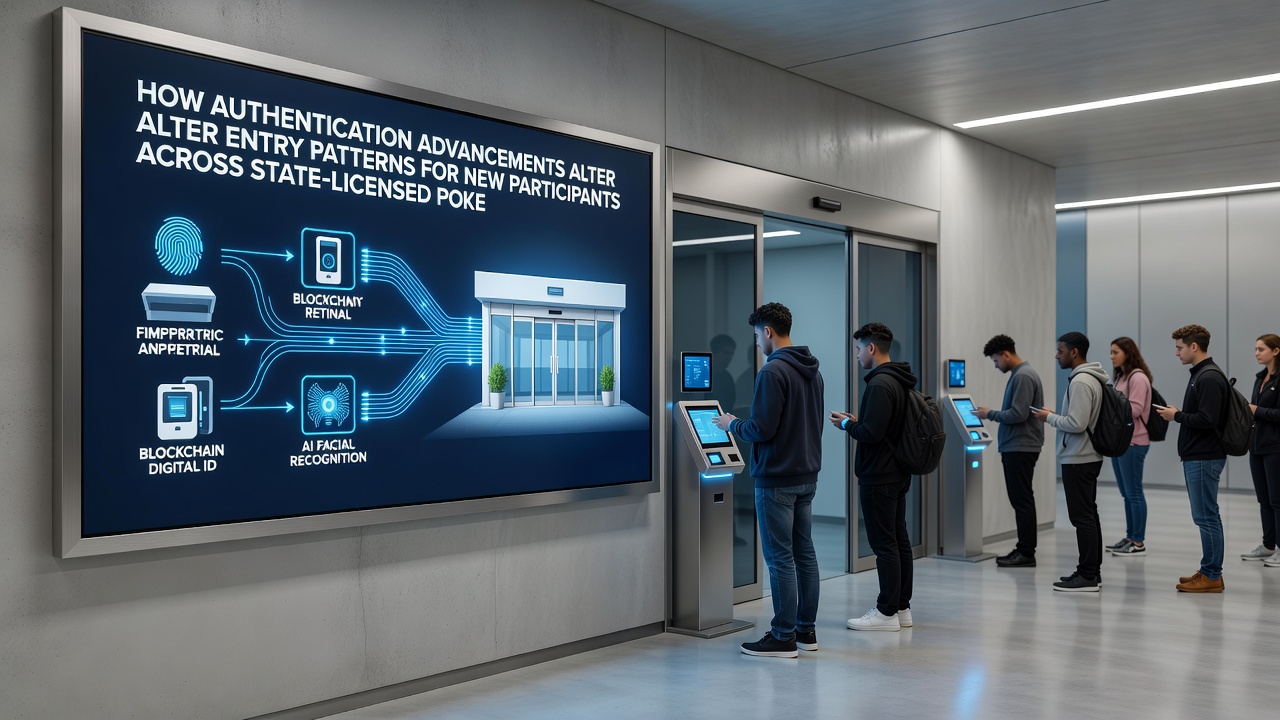
Cross-border data sharing agreements between states have further influenced entry flows. When platforms can reference previously verified profiles from adjacent jurisdictions, new participants experience reduced duplication of identity checks. According to reports compiled by the Illinois Gaming Board, multi-state poker networks saw a 19 percent rise in accounts originating from users previously verified in neighboring states during the first half of 2026. Live dealer operators report parallel outcomes, with verification reuse contributing to quicker table access for returning travelers who maintain residency in regulated markets.
Regulatory Alignment and Platform Adaptations
State gaming commissions have updated technical standards to accommodate encrypted biometric templates stored locally on user devices rather than centralized servers. This adjustment addresses privacy concerns while maintaining compliance with identity verification mandates. Platform operators have responded by integrating modular authentication layers that adapt based on user location and account history, allowing seamless transitions between poker cash games and live dealer tables without additional identity prompts.
Industry analyses conducted by the American Gaming Association indicate that networks employing adaptive authentication record lower rates of account abandonment during the signup phase. Those tracking monthly metrics note that the proportion of new participants completing registration and making an initial deposit within the same session has increased steadily since mid-2025, particularly in markets where live dealer traffic constitutes a growing share of overall activity.
Security Outcomes and Ongoing Adjustments
Advancements in authentication have coincided with measurable reductions in fraudulent account attempts across licensed networks. Data compiled through June 2026 shows that platforms using combined biometric and behavioral analysis experienced a 34 percent drop in flagged registrations compared with the prior year. Poker operators and live dealer providers have continued refining threshold settings to balance security with accessibility, and regulators in several states have conducted periodic audits to verify that these systems do not inadvertently restrict legitimate new participants.
Future platform updates are expected to incorporate additional signals such as geolocation consistency and transaction pattern analysis, yet current implementations already demonstrate clear effects on how new users navigate entry procedures. The trajectory established through mid-2026 suggests continued convergence between regulatory requirements and technological capabilities in both poker and live dealer segments.
Conclusion
Authentication advancements have produced measurable changes in entry timelines, verification success rates, and cross-state account flows for new participants in state-licensed poker networks and live dealer platforms. Continued monitoring by regulatory bodies and research institutions will determine how these systems evolve alongside emerging compliance standards.